

Does your mom use AI?
Polling my family and friends to see how and when they use AI

I work in tech, so naturally my bubble is full of people using AI for damn near everything. Requirements drafting, building prototypes, sending emails; pretty much every single person in my immediate professional circle treats AI as a utility.
I always want to be checking my biases. With my usage of platforms like Cursor and Claude consuming a numerous amount of my daily tasks, AI is a place I want to keep a level head about as the world grapples with the societal, economical, and environmental effects of this aggressive productivity.
So naturally I decided to bother my friends and family.
My core findings
I set out to identify exactly how my circle of humans is using AI technology. The questions I wanted to ask are simple.
Do you use AI?
If yes, how often?
How do you use AI professionally?
How do you use AI personally?
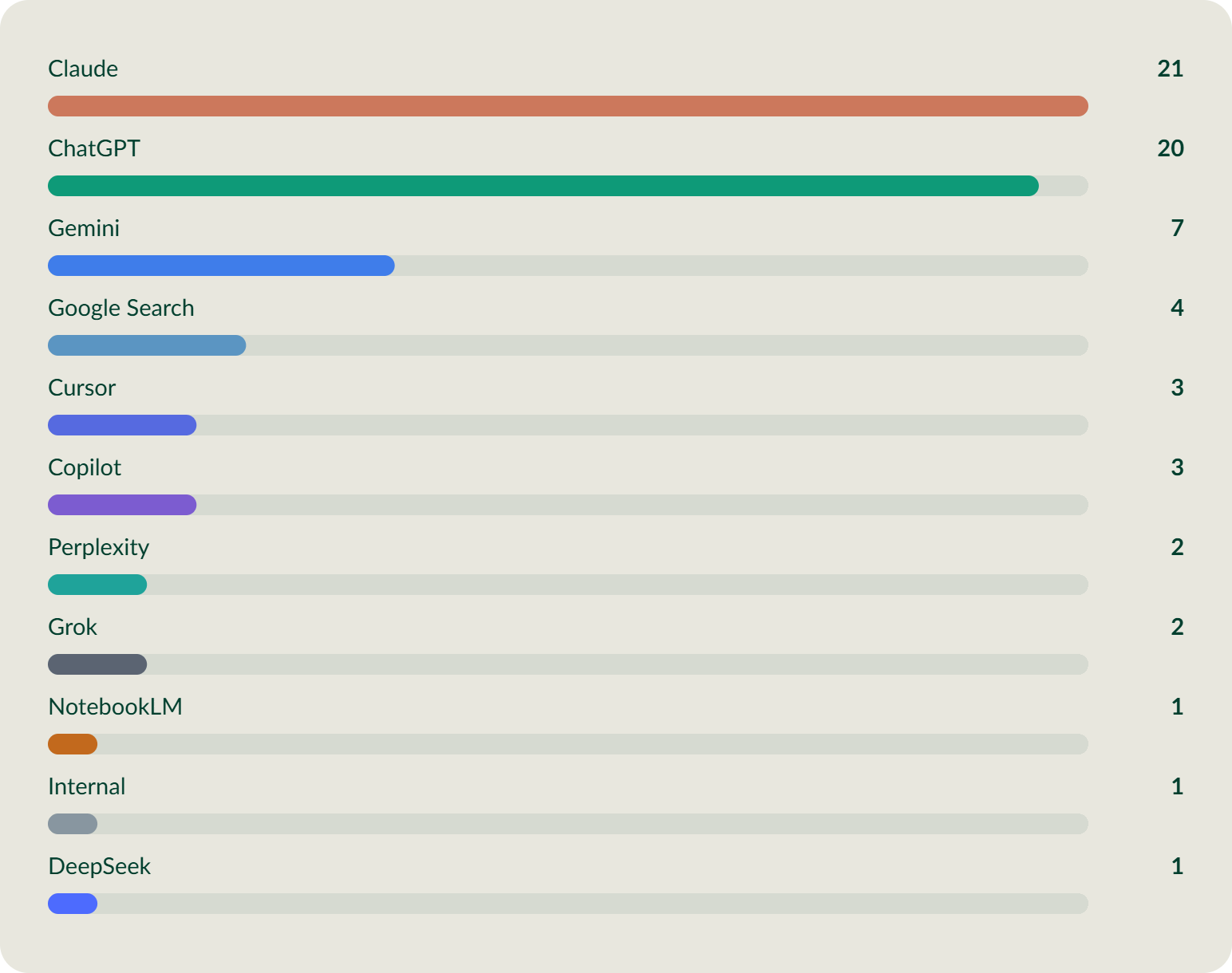
What AI service do you typically reach for?
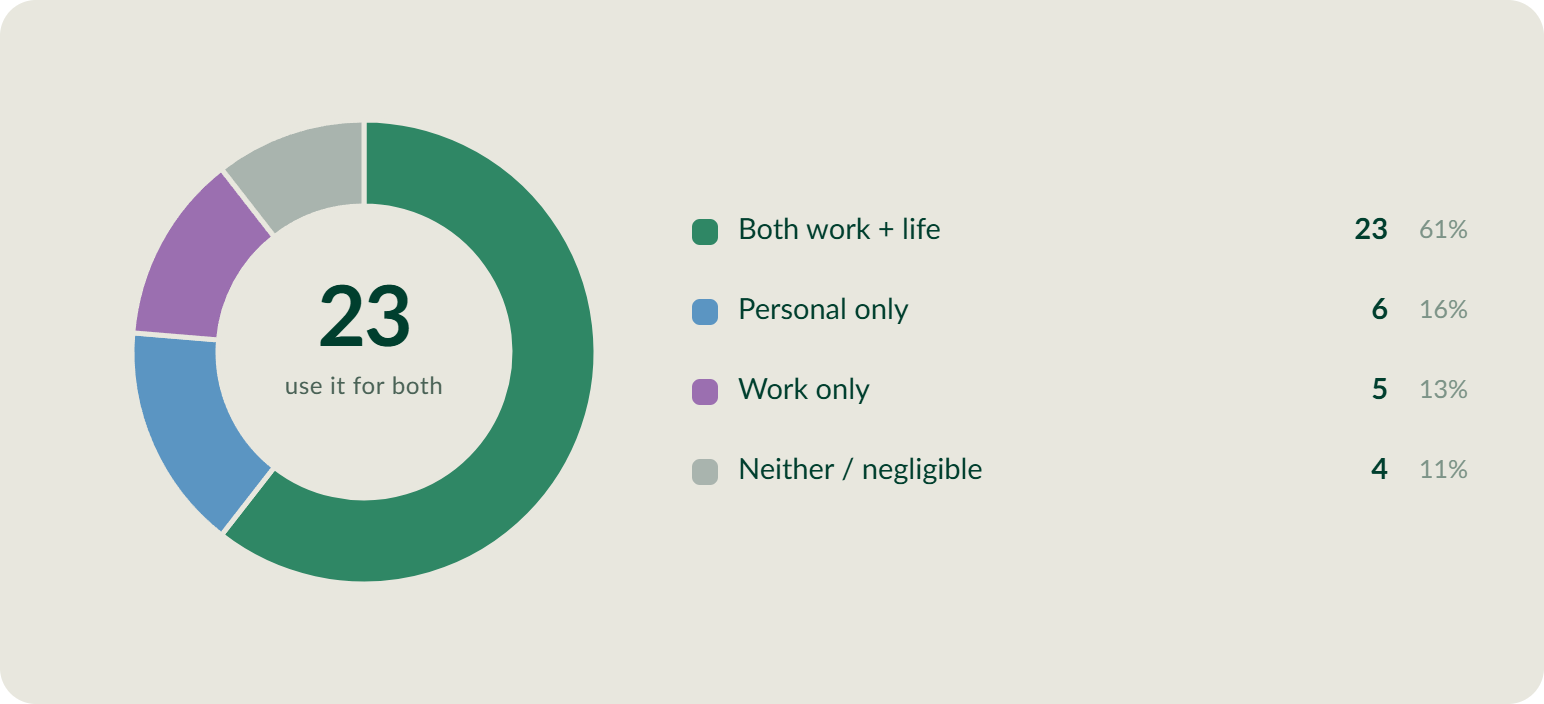
And that’s it. Here’s the core of it. Do you use AI?
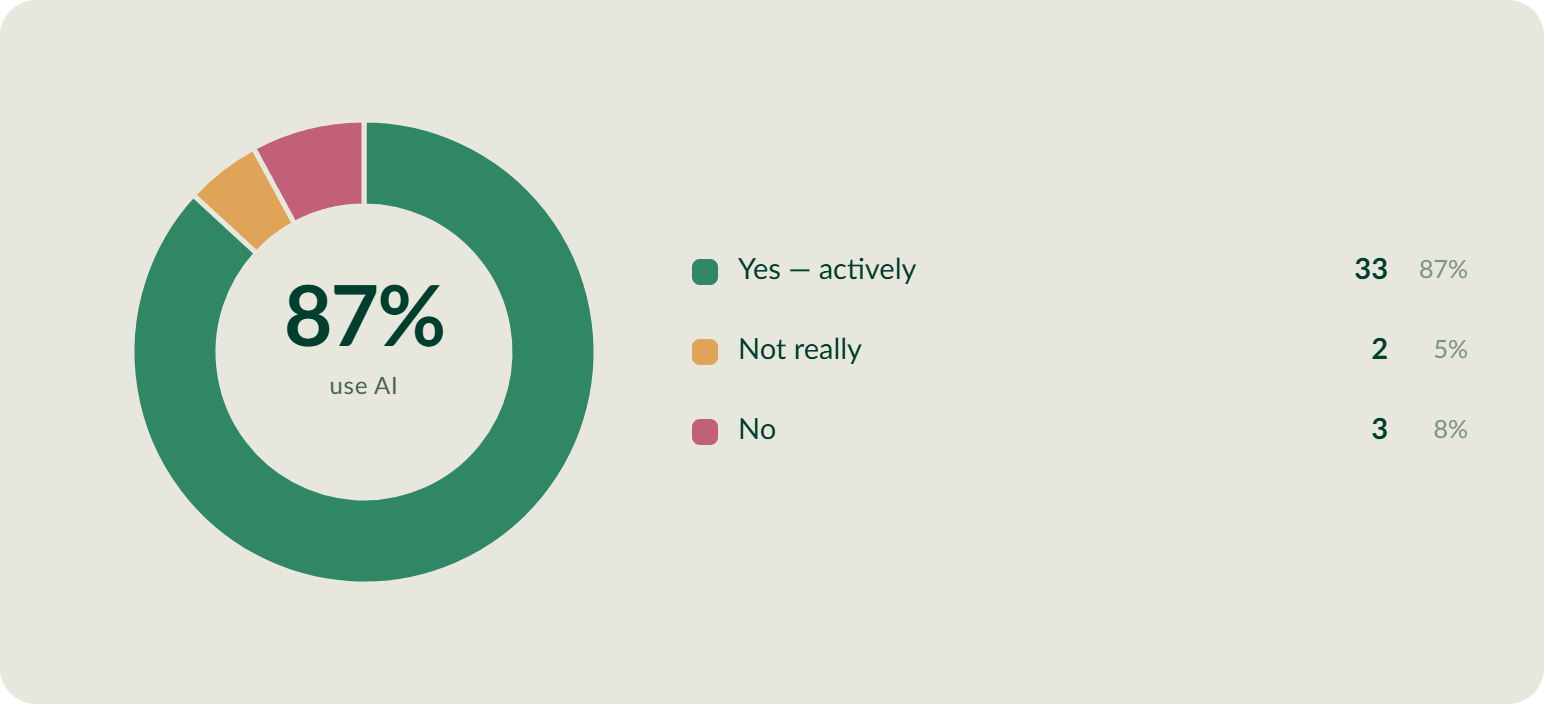
I wasn’t surprised that most said they use AI. I’ve seen enough broad usage metric data on this for it to be obvious that AI touches nearly everyone’s life at some point. What did surprise me is the frequency and type of usage.
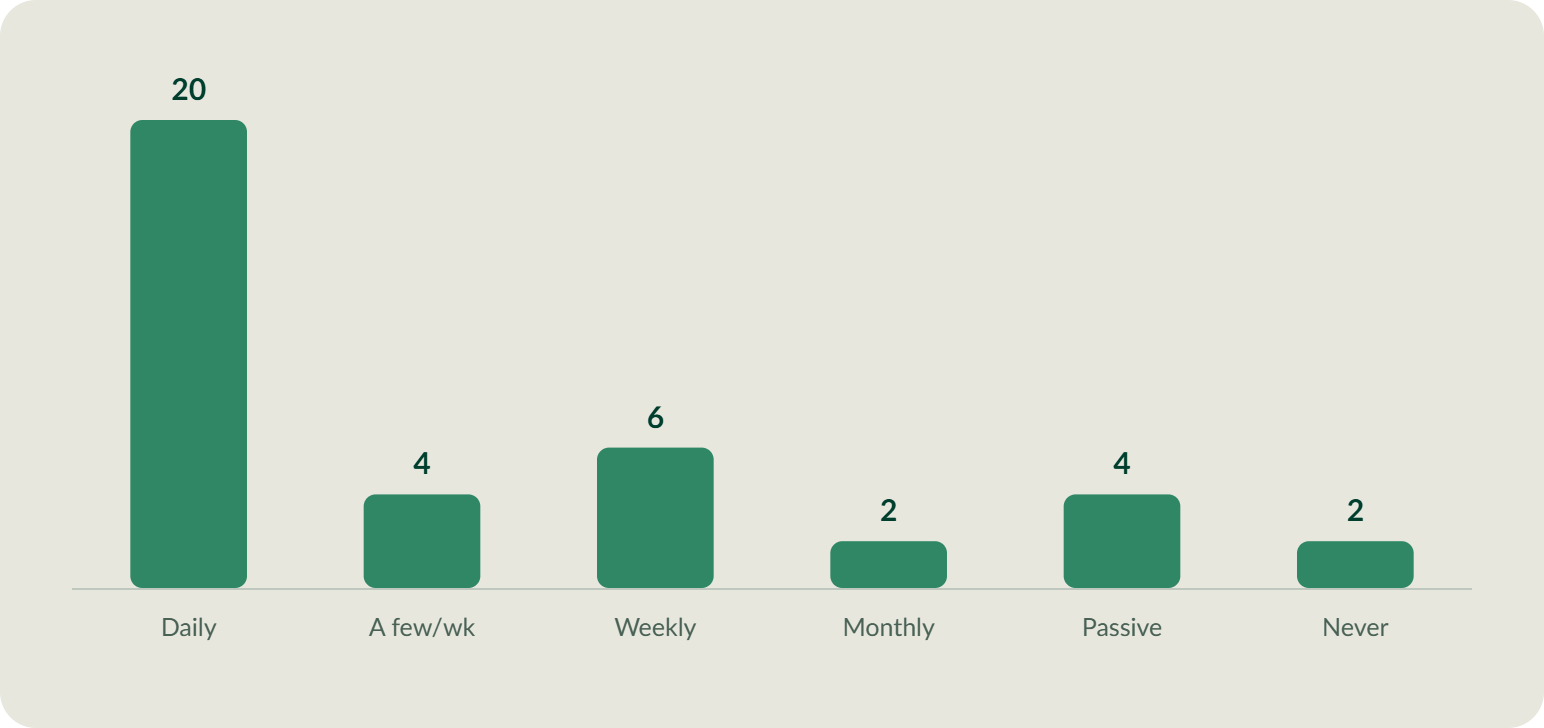
I had expected a significant chunk of my circle to use AI indirectly via things like Google’s AI Search results and intelligent features baked into non-AI products. However, this was a dramatic minority. Most people around me, both active supporters and critics of the technology, are using it daily and extensively (and yes, my mom uses AI).
On top of the general usage, I wanted specifics on where they were using AI in their day-to-day.
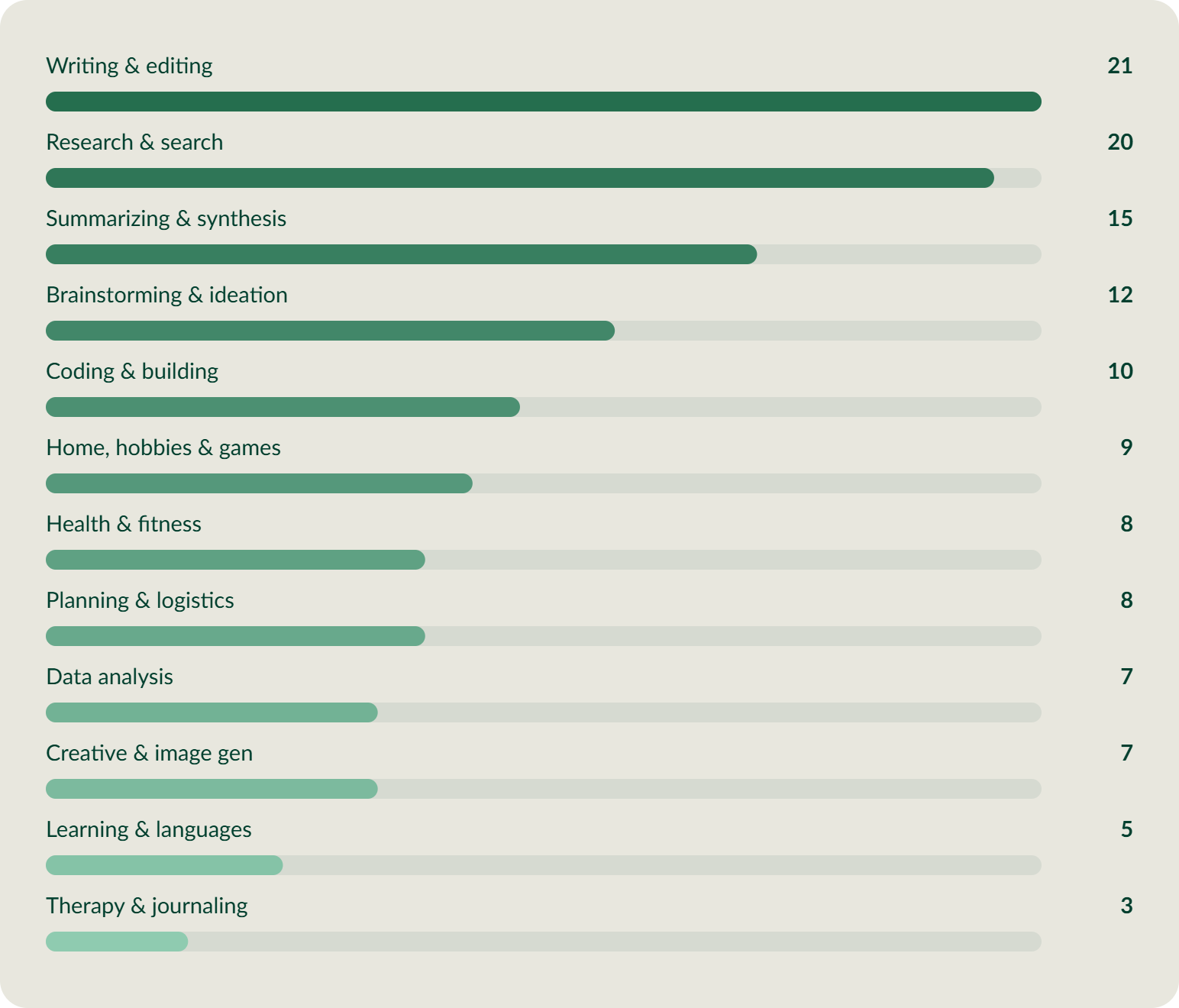
There seemed to be a clear pattern toward productivity work with these tools, though the usage is pretty evenly spread across personal and professional. I wasn’t surprised to see creative tasks so low on the list, given my proximity to media industries, but was surprised that coding and building was down in fifth.
Breaking it down
Alongside the responses I tracked some anonymized demographical information: namely gender, perceived political ideology (based on my conversations with them), and job function and industry. I try to keep a balanced circle of folks around me but, unsurprisingly, the majority work within tech or tech-adjacent industries that are typically heavier on AI use. From a professional perspective, the industry splits looked like this:
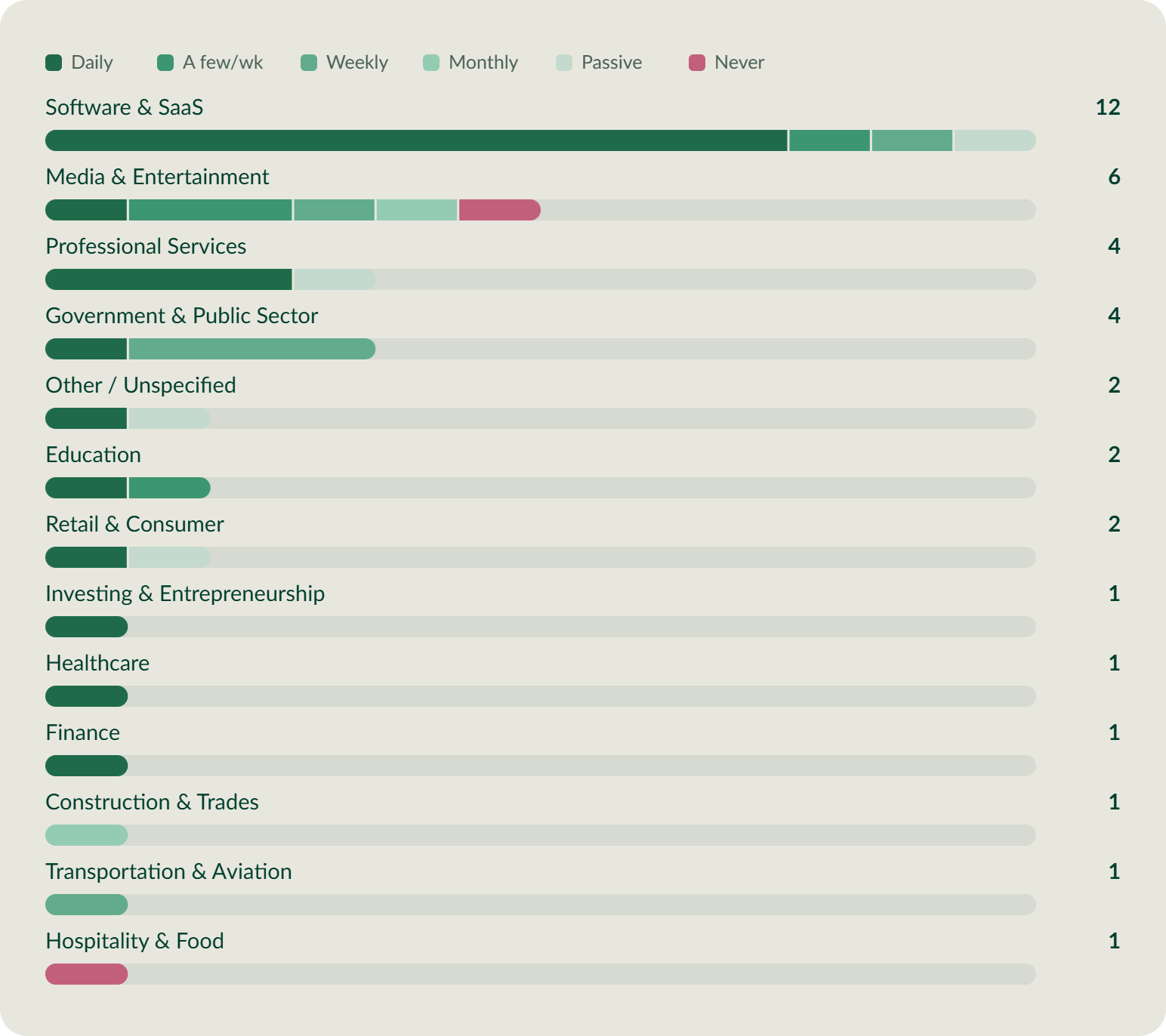
And the specific job function splits as such:
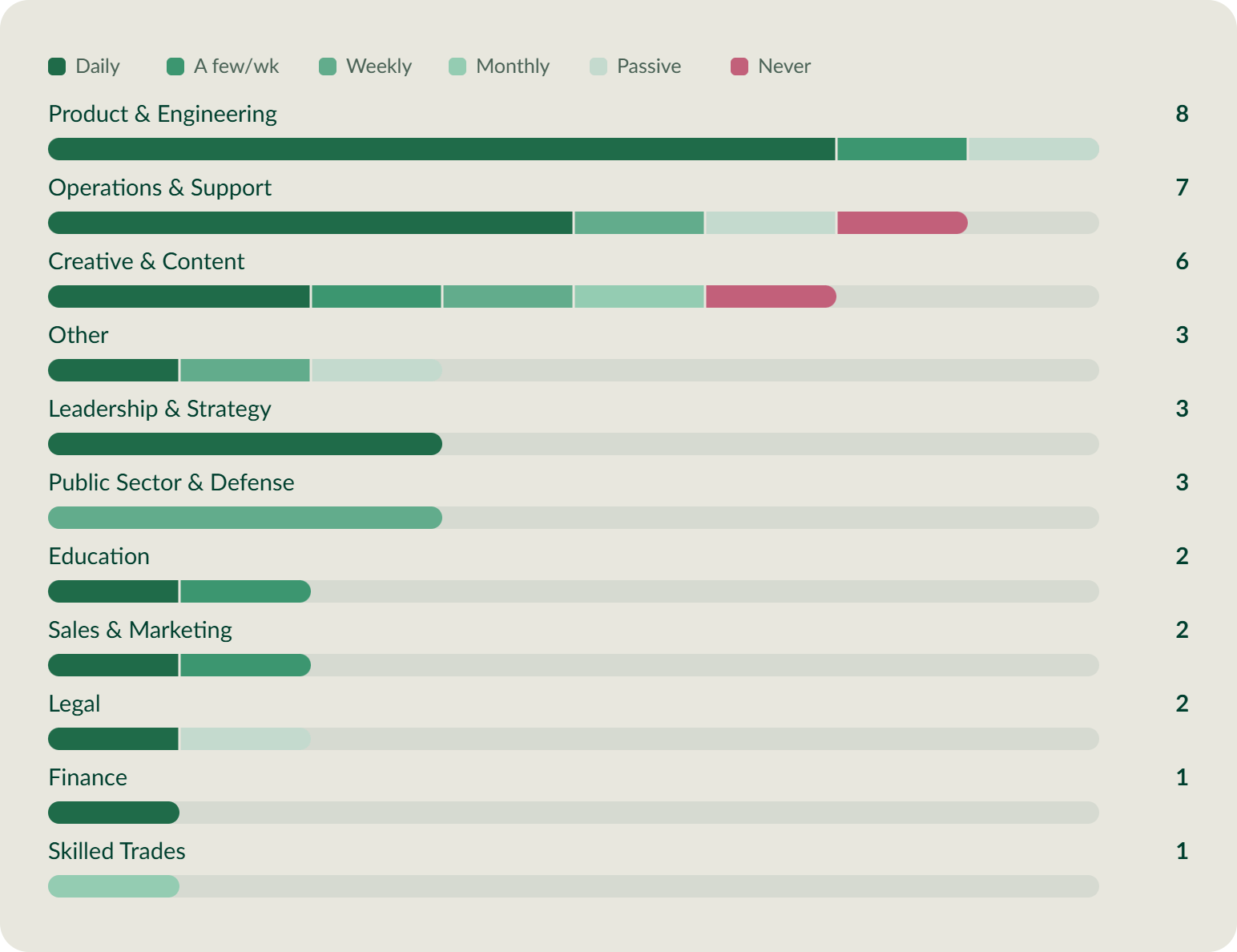
Software and product are at the top here, which I expected giving my own personal industry and job function. The rest is fairly run-of-the-mill as well. Operations, content, strategy; these are functions heavily saturated with tasks ripe for automation with tools like Claude Cowork. They’re data-oriented and repetitive. Meanwhile, areas like skilled trades and hospitality being uninterested in the tech makes sense (though my sample size there is tiny).
From a gender perspective, here’s where it landed:
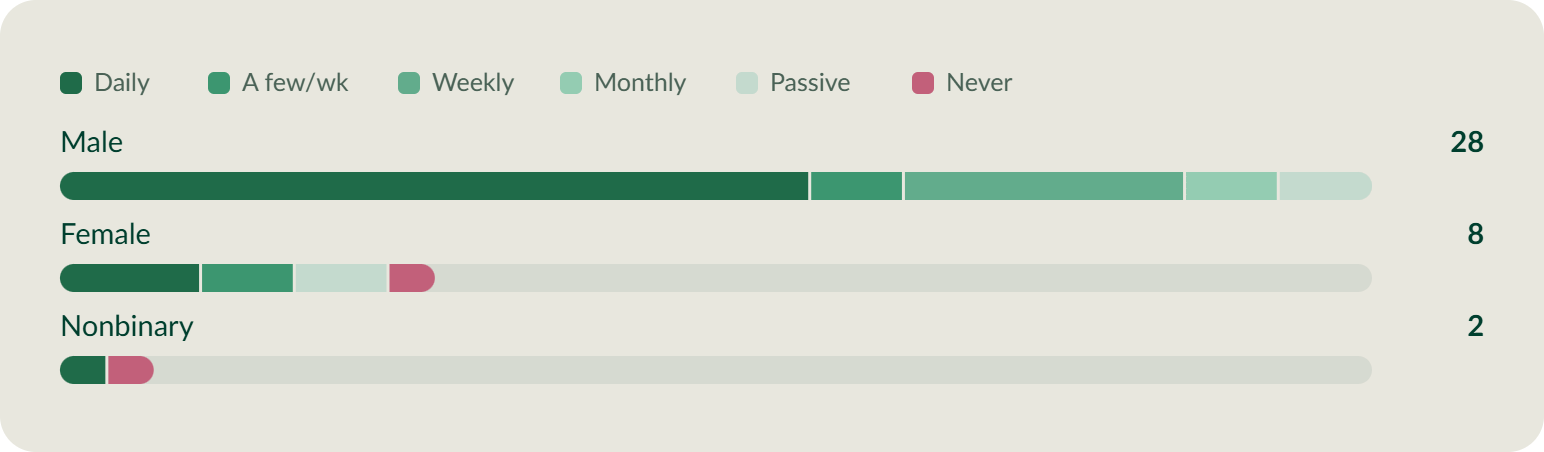
Nothing remarkable and fairly evenly split across the represented genders. Mostly this data is telling me that I need to widen my non-male circles.
Finally, I wanted to get a little spicy and see the breakdowns based on my own perception of their political ideologies and religious affiliations. My own biases are going to be baked into these perceptions (hello, right-wing blind spot), but I wanted to capture some sort of ideological split without having to ask the group to share specifics on their current beliefs.
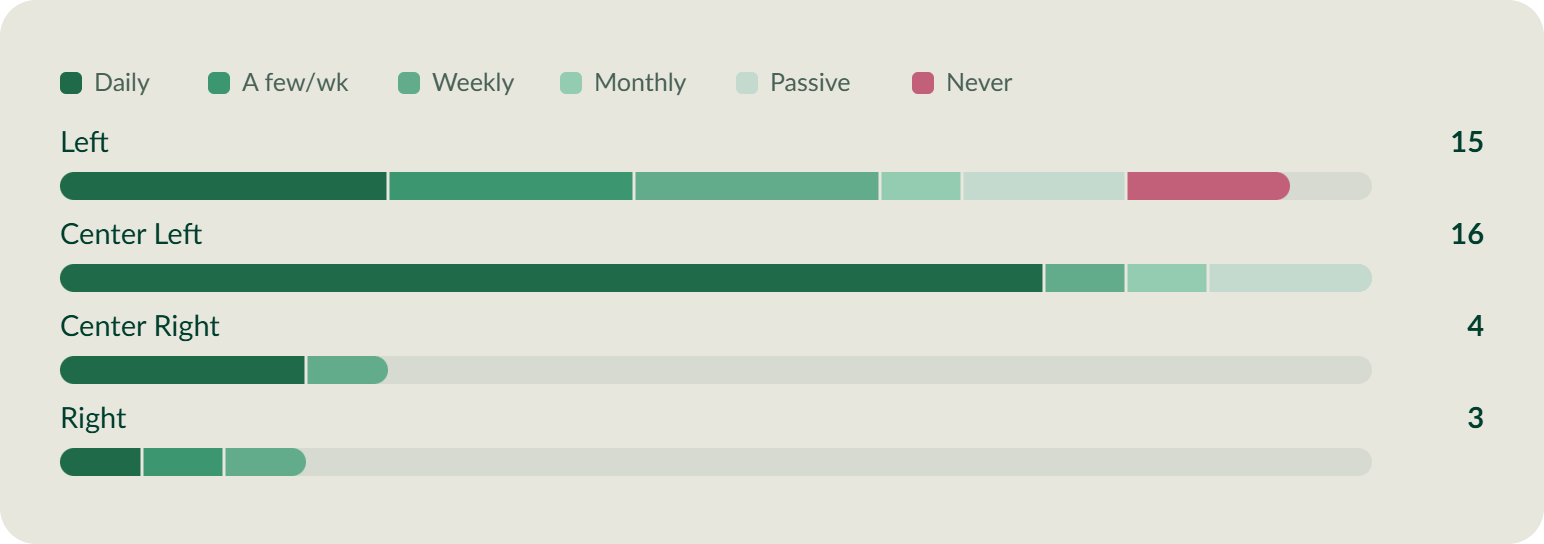
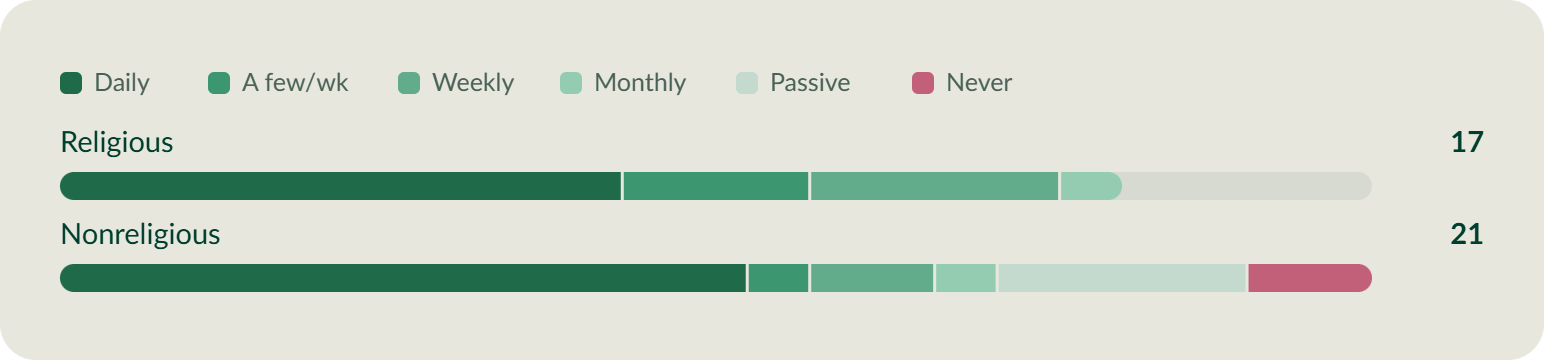
My main takeaways from these are:
“Center Left” folks are overly represented within daily AI use compared to other perceived ideological affiliations. This makes sense for my circle of white collar, center left tech workers.
Both cases of non-AI usage come from those more left-leaning, which makes sense with the rising environmental and societal concerns.
Religiousness seems to not correlate at all with AI usage. It’s a wash.
While tracking these types of stat points are fun, my overall takeaway from them is that in order to run proper analysis on these types of sensitive convictions, I’ll need a bigger dataset and more accurate datapoints. Next time.
Some other tidbits
Any good data analyst knows that the cross-analysis is the fun part. While my dataset here is a bit small, I wanted to be sure to include some of this to try and identify any meaningful patterns. Here’s what I found.
Which tool wins, by how they know me
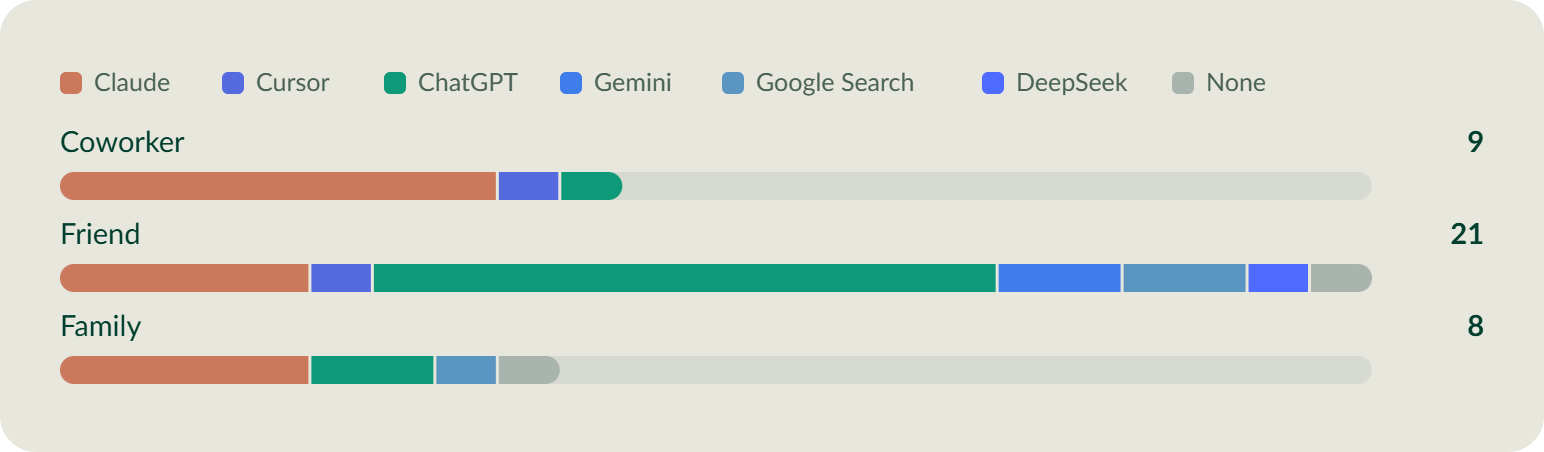
I’ve been trying to spread the good news of Claude and Cursor for a long time now, so it’s nice to see significant Claude usage in my circle. The ChatGPT usage is highly disproportionate among my friends compared to coworkers and family, which most likely speaks to its ubiquity for casual use among people in my age range.
What predicts heavy use?
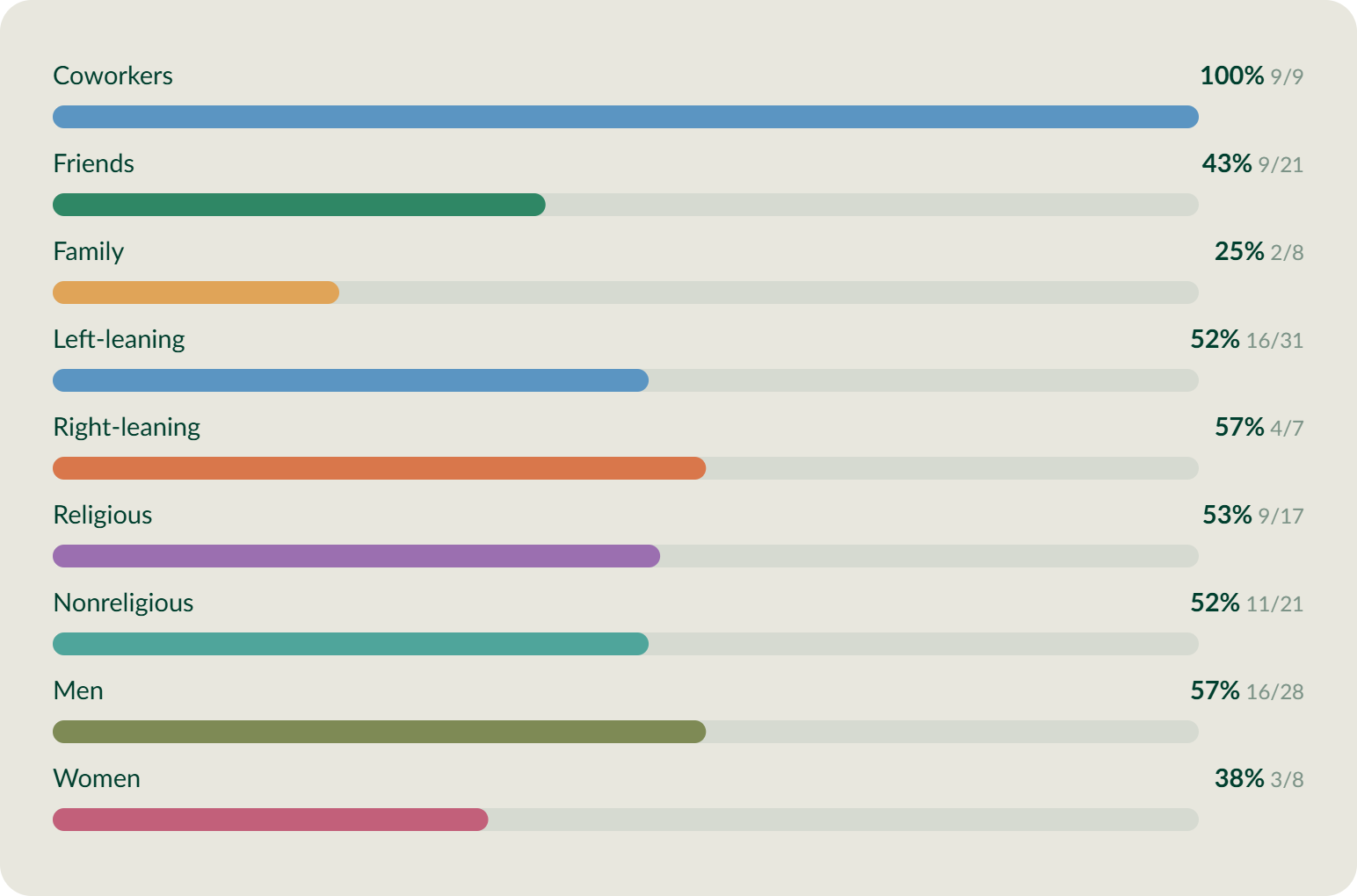
Proximity to me (and, by extension, to tech) seems to predict daily use far more than politics, faith, or gender, which barely move the needle. 100% of my polled coworkers are using AI daily, compared to groups like my family (25%) and women (38%).
The dataset here isn’t perfect but its intimate to me. When I started out on collecting this data, I wasn’t necessarily looking to accurately identify broad AI usage metrics. I simply wanted to know what the spread looks like among those close to me.
Overall I’m surprised. Given the conversations I have with these folks on a regular basis, I would have expected much less daily AI usage. Reason stands that, even for someone like myself who’s writing about this industry regularly, I’m underestimating just how prevalent this new tech has become in such a short amount of time.
You can view all of the charts here, alongside the full dataset, on my website:
The surprise here is how normal AI use has already become outside the usual tech crowd.
You spend all day reading arguments about adoption, then your mum’s already using it and didn’t think to announce a transformation programme.
Interesting findings. I've noticed something similar. People know AI is important, but many still haven't crossed the line from curiosity to regular use. That gap feels much bigger than most of us in the AI bubble realize.